Welcome to Trezor Start
Trezor Start is your gateway to safely managing digital assets. Whether you are new to cryptocurrencies or have some experience with blockchain technology, this guide provides the knowledge and guidance needed to protect your digital assets. Trezor Start focuses on understanding security, using hardware wallets effectively, and adopting responsible practices in digital asset management.
Digital assets, unlike traditional banking, rely on cryptographic keys to establish ownership and authorize transactions. Learning how to safeguard these keys is essential. This page introduces the fundamental concepts, tools, and practices to help you confidently navigate the digital finance ecosystem.
Understanding Digital Asset Ownership
Digital assets, including Bitcoin, Ethereum, and other cryptocurrencies, rely on cryptographic key pairs: a public key and a private key. The public key functions like an address where assets can be sent, while the private key gives you control and ownership over those assets. Protecting your private key is crucial because anyone with access to it can spend your funds.
Digital assets often operate without intermediaries. Unlike bank accounts or traditional financial systems, there is no central authority to recover lost credentials or reverse unauthorized transactions. This self-custody model provides complete control but also places full responsibility on the user. Trezor Start emphasizes understanding these responsibilities and applying safe practices to maintain the security of your assets.
What Is a Hardware Wallet?
A hardware wallet is a physical device designed to store private keys securely offline. Unlike software wallets running on a computer or smartphone, hardware wallets isolate sensitive information from internet-connected devices, reducing exposure to malware, phishing, and other cyber threats.
Trezor devices feature a secure element and a simple user interface. Every transaction is verified and approved directly on the device, ensuring that even if your computer or smartphone is compromised, your private keys remain safe. This combination of offline storage and physical confirmation provides a high level of security for managing cryptocurrencies.
Setting Up Your Trezor Device
Setting up a Trezor device is straightforward, but it requires careful attention to security. The process involves creating a PIN, generating a recovery seed, and connecting the device to Trezor Suite or other compatible applications.
Creating a PIN
The PIN is your first layer of security. It protects your device from unauthorized access and must be entered each time the device is powered on. Choose a unique, non-obvious PIN, and never store it digitally or share it with anyone. A strong PIN helps ensure that even if the device is lost or stolen, your assets remain protected.
Generating a Recovery Seed
During setup, the device generates a recovery seed—a series of words that acts as a backup for your wallet. This seed allows you to restore your wallet and access your assets if the device is lost, stolen, or damaged. The recovery seed is highly sensitive and must be stored offline in a secure location. Trezor Start strongly recommends against photographing it or storing it digitally, as that could compromise your security.
Using Trezor Suite
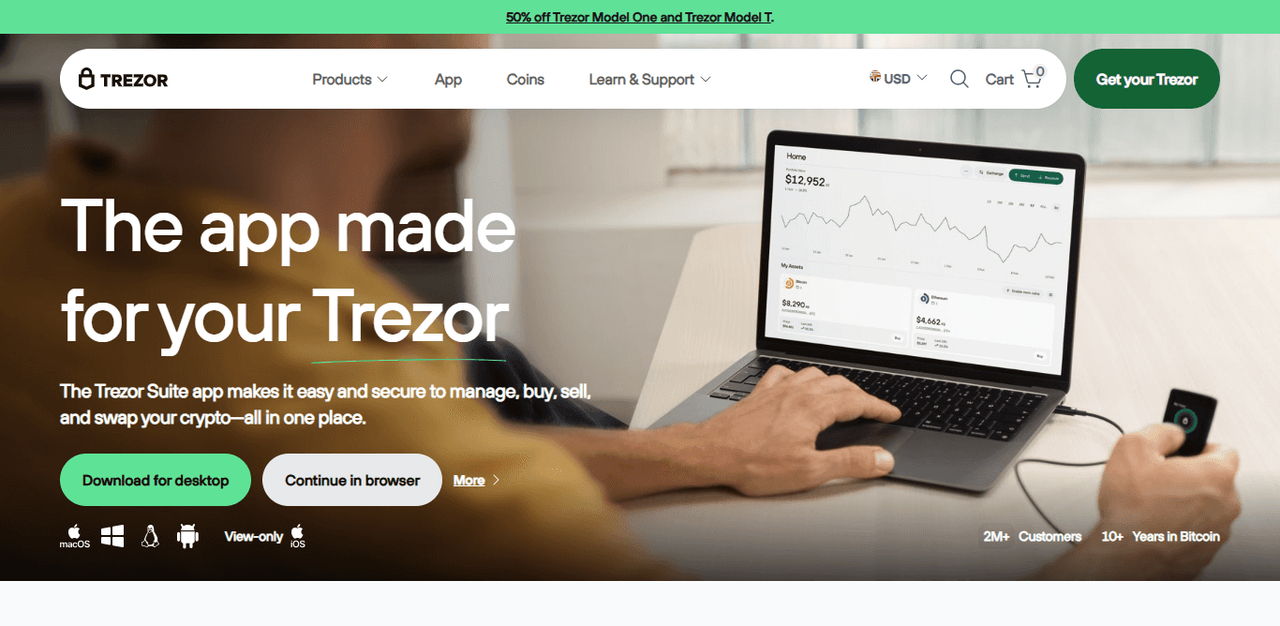
Trezor Suite is the official application that allows you to interact with your Trezor device and manage your digital assets. It provides a user-friendly interface for managing cryptocurrencies and monitoring account activity. With Trezor Suite, you can:
View account balances across multiple cryptocurrencies
Send and receive digital assets securely
Monitor transaction history
Install and manage support for additional cryptocurrencies
Trezor Suite operates in tandem with your hardware wallet, while your private keys remain protected on the device. This separation ensures that even if your computer or smartphone is compromised, your assets remain secure. The combination of a hardware wallet and Trezor Suite provides both convenience and strong security.
Security Best Practices
Trezor Start emphasizes several best practices to help protect your digital assets:
Protect Your Recovery Seed: Keep it offline in a safe location. Never share it online or store it digitally.
Be Cautious of Phishing: Verify website addresses carefully and avoid responding to unsolicited messages requesting your recovery seed or PIN.
Keep Firmware and Software Updated: Regularly update your Trezor device and Trezor Suite to benefit from the latest security enhancements.
Verify Transactions on the Device: Always confirm transaction details, including recipient addresses and amounts, on the Trezor device itself before approving any operation.
Limit Exposure to Risk: Avoid using public or unsecured Wi-Fi networks when managing digital assets.
Adopting these practices ensures that your assets remain safe even in a dynamic and sometimes risky digital environment.
The Importance of Self-Custody
Self-custody gives users full control over their digital assets. Unlike exchanges or third-party custodians, there is no intermediary to recover lost credentials or reverse transactions. While this provides independence and control, it also requires responsibility.
Trezor Start emphasizes the importance of understanding your responsibilities as a self-custody holder. Beginners are encouraged to start with small amounts, practice using their device, and gradually gain confidence in managing larger amounts. Responsible handling and ongoing education are key to long-term security.
Advanced Considerations
As you become more experienced, there are additional considerations for securing digital assets:
Multi-signature Wallets: Distributing control across multiple devices or individuals adds an extra layer of security.
Backup Strategies: Consider multiple secure backups for recovery seeds, ensuring redundancy without compromising safety.
Regular Review: Periodically review your security practices and update your methods to adapt to new threats.
Trezor Start encourages users to approach these advanced topics gradually, building knowledge over time.
Continuing Your Learning Journey
The digital asset space evolves rapidly, with new technologies, applications, and security considerations emerging constantly. Learning does not stop after initial setup. Trezor Start encourages ongoing education through official resources, support documentation, and trusted learning platforms.
By combining secure hardware, reliable software, and continuous learning, users can approach digital asset management with confidence. Awareness, vigilance, and best practices form the foundation for responsible long-term use.
Final Notes
Trezor Start is an educational guide designed to help users understand the essentials of digital asset security and hardware wallet usage. It is not financial or investment advice. Users are responsible for their own actions and should ensure they fully understand the risks involved in managing cryptocurrencies and other blockchain-based assets.
Taking security seriously from the start, following best practices, and continuously learning are essential for safely managing digital assets. Trezor Start provides the foundation for confident, responsible engagement with digital finance.